Student-Led Open House
6th Grade, Reeths-Puffer Intermediate
How can we work together to create an Open House that introduces our classroom and welcomes our families into our learning community?
This kick-off project introduces students to project-based learning and the design thinking process by having them take ownership of a real event: their classroom's Open House for families. Students consider what information parents and families need to know, why that information matters, and how to communicate it effectively.
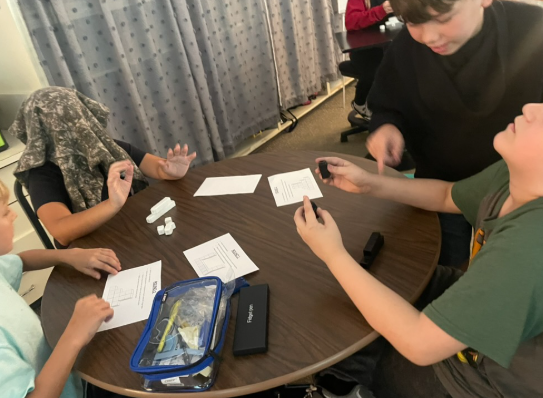
Students begin by empathizing with their audience—families who want to understand what their children will experience in 6th grade. They explore expectations for the year, learn about the PBL portfolio system, and consider how to make newcomers feel welcome. Using a Driving Question Board (DQB) activity, students generate questions and ideas about what makes an effective Open House.
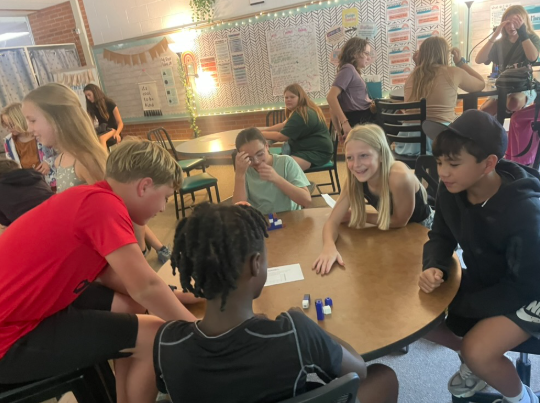
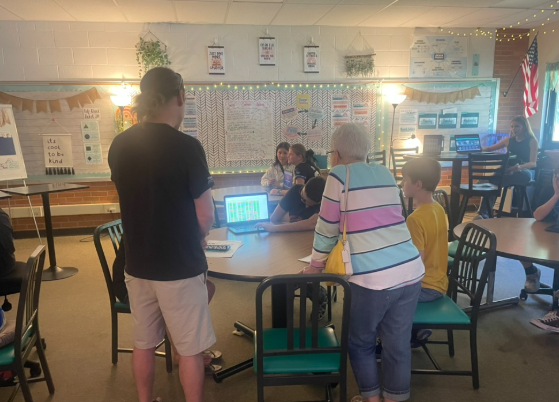
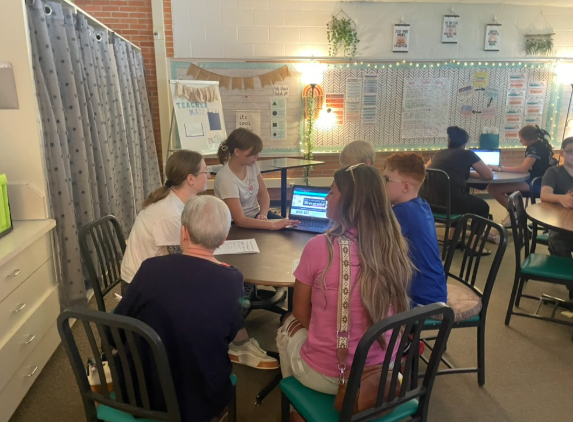
Working collaboratively, students define goals and criteria for success, then ideate solutions for how to present information through interactive stations. They create prototypes of their Open House materials and displays, receive peer feedback, and refine their work. Before the actual event, students test their Open House design twice with 5th graders, gathering feedback to make final improvements.
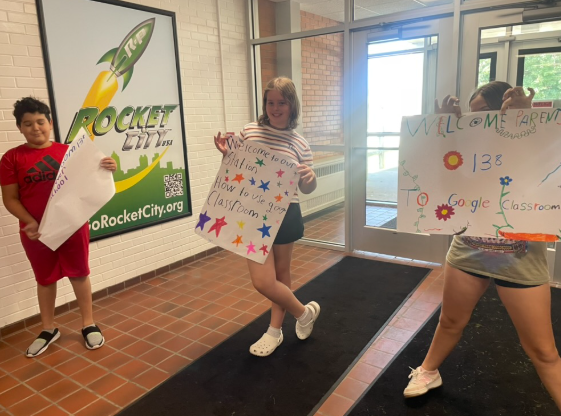
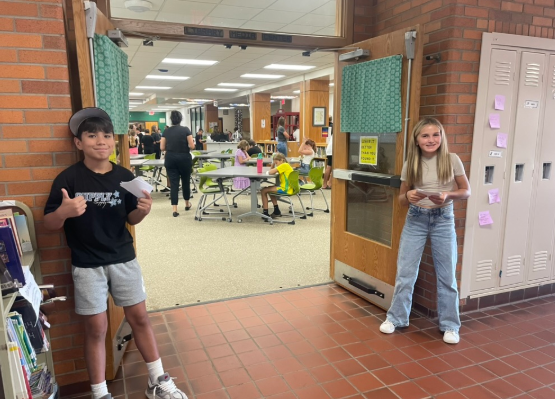
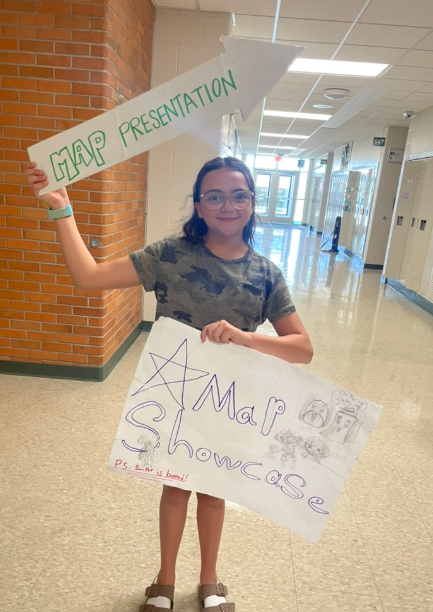
The project culminates in students hosting the Open House for their families, with reflection activities for both students and families to assess the experience and celebrate the start of the school year.
Resources
Community Partners
- 5th grade students (user testing)
- Student families (Open House attendees and reflection participants)
Standards Alignment
English Language Art
- SL.6.1: Engage effectively in a range of collaborative discussions (one-on-one, in groups, and teacher-led) with diverse partners on grade 6 topics, texts, and issues, building on others' ideas and expressing their own clearly.
- SL.6.4: Present claims and findings, sequencing ideas logically and using pertinent descriptions, facts, and details to accentuate main ideas or themes; use appropriate eye contact, adequate volume, and clear pronunciation.
- W.6.4: Produce clear and coherent writing in which the development, organization, and style are appropriate to task, purpose, and audience.
Mathematics
- 6.G.A.1: Find the area of right triangles, other triangles, special quadrilaterals, and polygons by composing into rectangles or decomposing into triangles and other shapes; apply these techniques in the context of solving real-world problems. *(Applied to classroom layout and station design)*
Science
- MS-ETS1-1: Define the criteria and constraints of a design problem with sufficient precision to ensure a successful solution, taking into account relevant scientific principles and potential impacts on people and the natural environment that may limit possible solutions.
- Practice 6: Constructing Explanations and Designing Solutions
Social Studies
- C6.1.1: Purposes of Government—Nature of Civic Life, Politics, and Government Structure and Functions of Government. *(Connected to classroom community governance and shared decision-making)