Sustainability & Energy, Evolved
6th Grade, Orchard View Middle School
How do we create sustainable merchandise that represents our school's values while understanding the energy systems that power production?
This project combines two previously developed units, Renewable Energy and Sustainable Merchandising, building on their successes into a more cohesive learning experience.
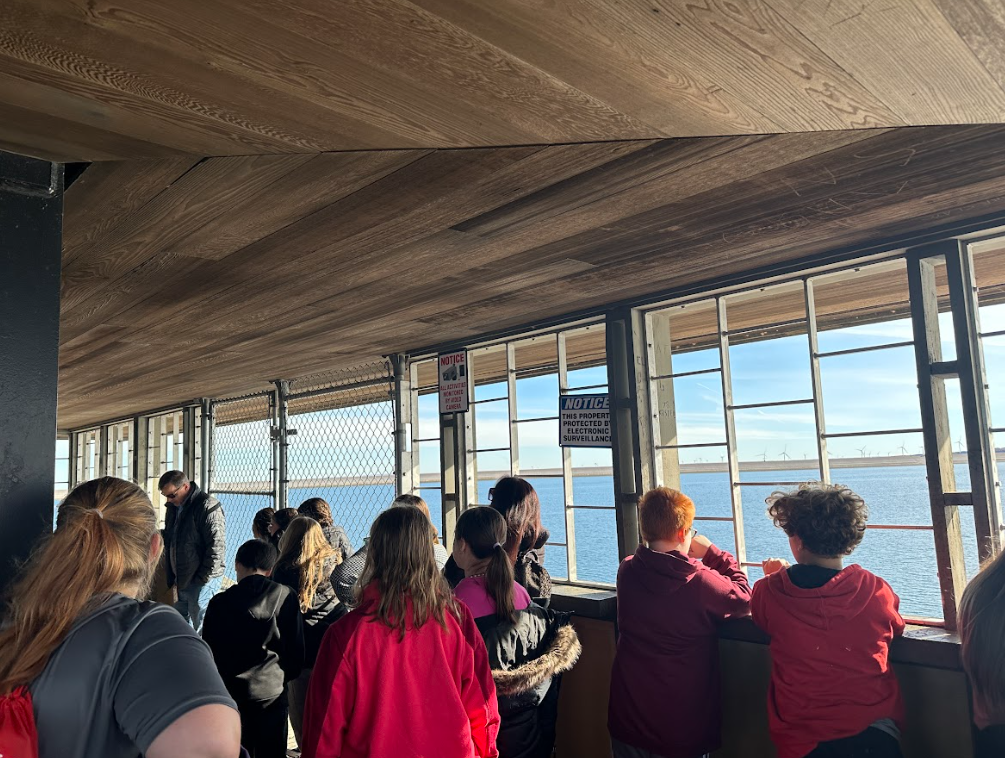
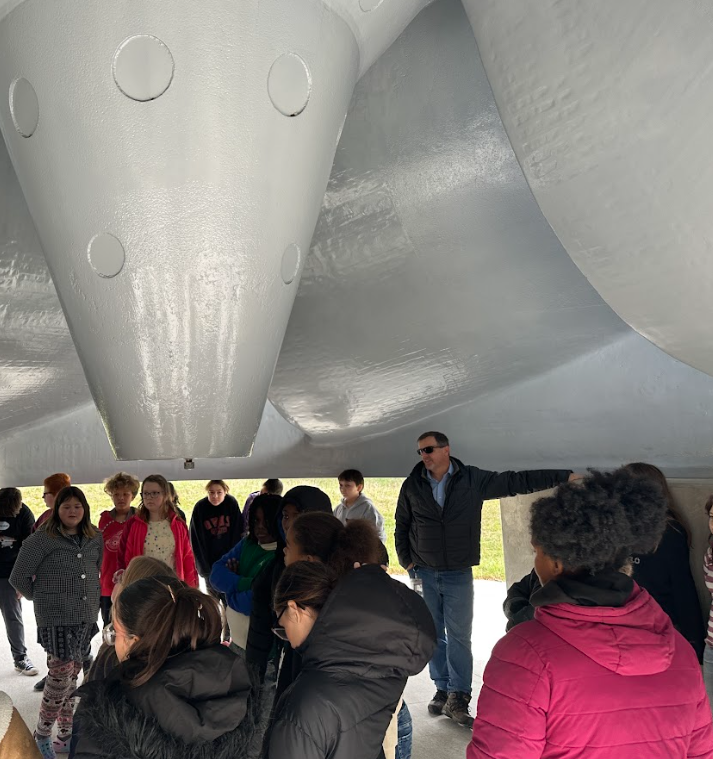
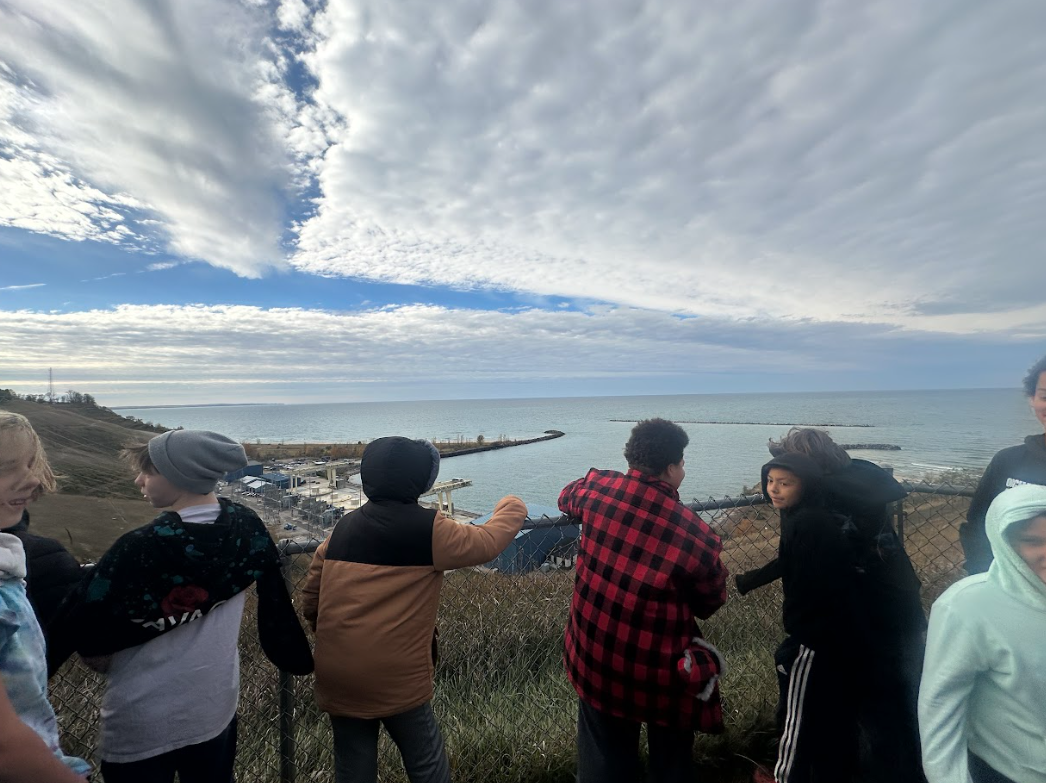
Students explore sustainable energy technologies through hands-on learning with local solar and wind company partnerships, examining both the benefits and drawbacks of renewable power sources. They apply their knowledge by building functional prototypes that demonstrate how sustainable energy can power small devices like lightbulbs, fans, and mini-cars. Students visited the Ludington Pumped Storage Plant to see sustainable power in action.
Simultaneously, students investigate the "farm-to-table" concept applied to fashion, researching the origins and production processes of clothing and examining the ethical and environmental impacts of garment manufacturing. They explore how various cultures express identity through fashion and the relationship between clothing, fibers, and local ecosystems.
Students analyze energy sources and production at local (Muskegon/West Michigan), national, and global levels through research, mapping activities, and cost-benefit analysis—connecting energy production to population patterns, environmental impact, and policy decisions.
The project culminates in students designing and screenprinting their own clothing that reflects their school's values, partnering with a new school store that prioritizes ethically produced and sustainably sourced merchandise.
Resources
Community Partners
- Ludington Pumped Storage Hydro Electricity (ConsumerEnergy)
- RAYGUN
- Dr. Brendon Christopher McCarthy
- Annis Water Research Institute
- Funkypunk
Standards Alignment
Science
- MS-ESS3-3: Apply scientific principles to design a method for monitoring and minimizing a human impact on the environment.
- MS-ESS3-4: Construct an argument supported by evidence for how increases in human population and per-capita consumption of natural resources impact Earth's systems.
- MS-PS1-1: Develop models to describe the atomic composition of simple molecules and extended structures.
Social Studies
- G4.3.1: Explain how people have modified the environment and used technology to make places more suitable for humans.
- G4.3.2: Explain why people settle where they do and how they make their living.
- G5.1.1: Describe how humans have impacted the environment as a consequence of population size, level of consumption, and technology.
- G6.5.1: Environment and Society—Humans and the Environment.
- E1.1.1: Explain how incentives and disincentives in the market economy can change the decision-making process.
- C6.1.1: Purposes of Government—Nature of Civic Life, Politics, and Government Structure and Functions of Government.
- C6.4.3: Relationship of United States to Other Nations and World Affairs—Conflict and Cooperation Between and Among Nations.
English Language Arts
- RI.6.3: Analyze in detail how a key individual, event, or idea is introduced, illustrated, and elaborated in a text (e.g., through examples or anecdotes).
- W.6.1: Write arguments to support claims with clear reasons and relevant evidence. (Supported by W.6.4, W.6.6, W.6.7, W.6.8)
- L.6.6: Acquire and use accurately grade-appropriate general academic and domain-specific words and phrases; gather vocabulary knowledge when considering a word or phrase important to comprehension or expression.
Mathematics
- 6.RP.A.3.B: Solve unit rate problems including those involving unit pricing and constant speed.
- 6.NS.B.2: Fluently divide multi-digit numbers using the standard algorithm.
- 6.NS.B.3: Fluently add, subtract, multiply, and divide multi-digit decimals using the standard algorithm for each operation.
- 6.EE.B.5/7: Writing and solving one-step equations and inequalities.
- 6.SP.B.4/5: Displaying and analyzing numerical data.